- Greg Owen-Boger Meetings, Presentations, Training, Virtual Communication
If you’re like most professionals we work with, you’ve sat through more than your fair share of murky meetings and aimless presentations. They often begin with chit-chat, segue into updates, and then meander through discussions with no clear sense of why everyone’s there or where the conversation is going.
This kind of ambiguity slows progress, frustrates participants, and chips away at your team’s confidence in your leadership. Fortunately, it doesn’t have to be this way.
At Turpin Communication, we’ve developed a practical tool we call the Framing Strategy. It’s designed to bring clarity and intention to your meetings and presentations, right from the start.
In this article, I’ll walk you through what the Framing Strategy is, why it matters, and how you can start using it immediately to foster more productive, less frustrating business conversations.
What Is the Framing Strategy?
The Framing Strategy is a simple, structured approach to launching a meeting or presentation. It helps you quickly establish direction and purpose, answering the two fundamental questions your audience is always wondering:
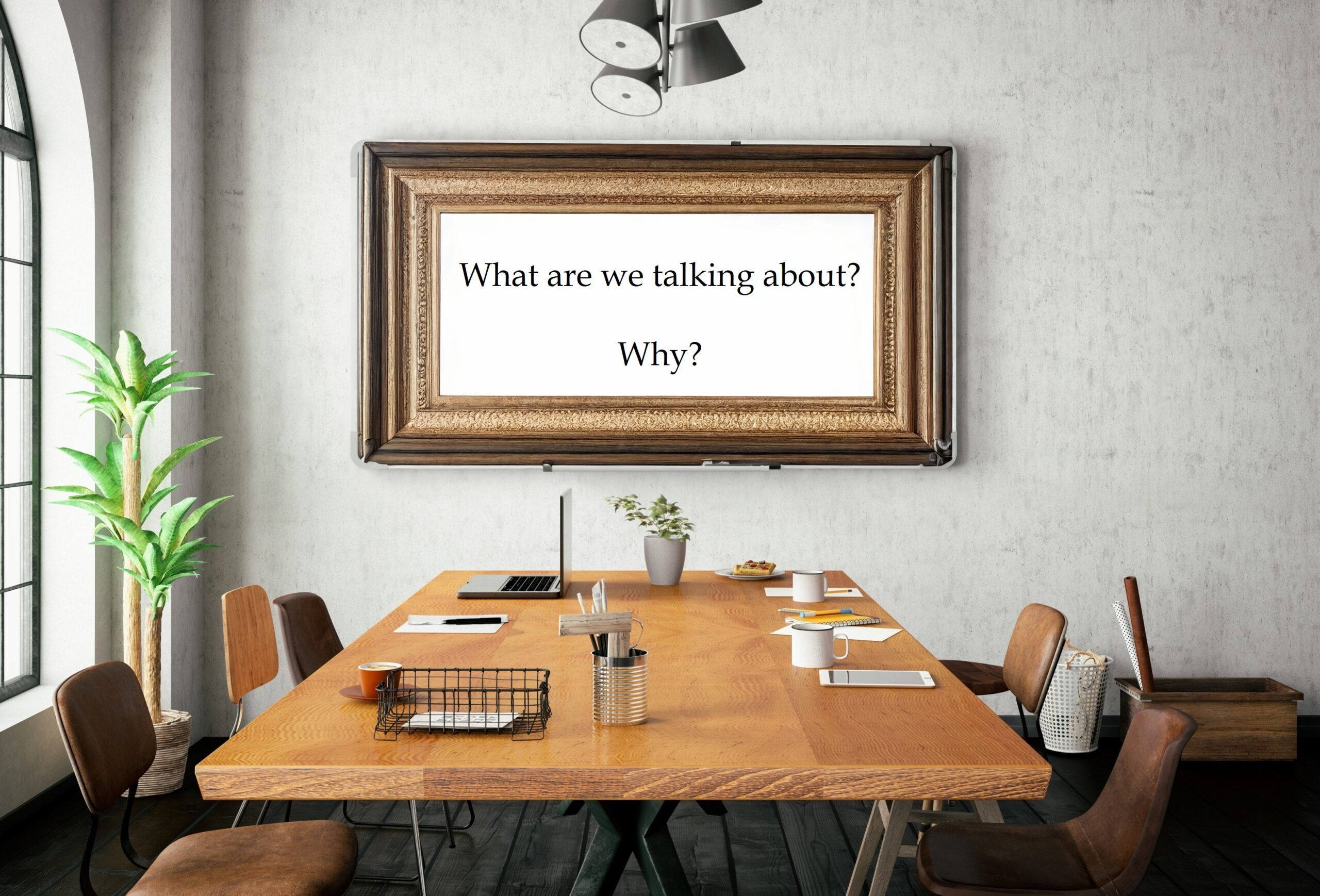
- What are we talking about?
- Why are we talking about it?
Think of framing as the act of formally beginning the conversation. You’re not diving into content just yet; you’re setting the stage so that everyone understands what’s about to happen and why their participation matters.
We sometimes describe it as giving people a map. If your meeting or presentation is the journey, the frame is the “You Are Here” pin with a clearly marked destination and route.
Why the Frame Matters
You probably already do a version of framing without thinking about it, maybe by kicking off with a quick agenda or a vague summary of the meeting’s purpose. But when you use the full Framing Strategy intentionally, a few good things happen:
- You save time by reducing off-topic meandering.
- You build trust by showing your audience that their time and attention are valued.
- You create alignment by making sure everyone understands the shared goal.
- You ease tension by acknowledging the current reality, especially when things are uncertain.
In short, when you frame a conversation, people relax. They understand where the conversation is headed and how they can contribute. This builds your credibility, and over time, it establishes you as a person they know they can trust to run an effective meeting that isn’t going to waste their time.
The Four Elements of the Frame
The Framing Strategy consists of four key components. Each plays a specific role in helping your audience feel oriented and ready to engage. Here’s how they work:
1. Current Situation
Start by acknowledging the context or the state of affairs that brings you together. This might include organizational challenges, recent events, or emotional undercurrents like fatigue, uncertainty, or momentum.
Examples:
- “I know there’s a lot going on right now, and priorities are shifting.”
- “We’ve had a few hiccups with the new system, and people are understandably frustrated.”
- “Our last campaign performed better than expected, and we want to keep that momentum going.”
- “Last time we spoke, you shared some concerns.”
This provides context and signals that you’re tuned in.
2. Goal
Next, clarify the purpose of the conversation. What are you trying to accomplish? How do you want the group to think, feel, or act as a result?
Examples:
- “By the end of this meeting, I’d like us to agree on the next steps for rolling out the new policy.”
- “Today’s goal is to decide whether we’re ready to take this proposal to leadership.”
- “I want you to feel confident using the updated system starting next week.”
This helps your audience calibrate their expectations to your intentions.
3. Agenda
Outline what will happen during your time together. It doesn’t have to be a PowerPoint slide or a bulleted list, but it does need to be clear.
Examples:
- “We’ll start with a quick update, then walk through the proposed changes, and wrap up with questions.”
- “We’ll look at recent trends, revisit our SWOT analysis, and draft a plan to address the risks.”
A clear agenda gives the conversation structure and prevents surprises.
4. Benefit
Finally, articulate what’s in it for them. Why should they care? What will they gain by being part of this conversation?
Examples:
- “This will help us avoid missteps later.”
- “You’ll leave today with a clearer understanding of what’s expected next quarter.”
- “By the end of this, we’ll be in a better position to reassure our clients.”
This part helps people engage not just out of obligation, but because they see the value.
Using the Framing Strategy in Real Life
Let’s look at a quick example from a staff meeting:
“Thanks for joining. I know things are hectic, and time is tight (Current Situation). The goal today is to align on team priorities for the upcoming sprint (Goal). We’ll start with updates, then review the backlog, and finally assign tasks (Agenda). The reason we’re doing this is to make sure everyone has what they need to move forward without delays (Benefit).”
In fewer than 75 words, you’ve acknowledged the current situation, set a goal, outlined an agenda, and explained the benefit. That’s the Framing Strategy in action.
And it works just as well in high-stakes leadership meetings. Consider this:
“I want to acknowledge that this is a challenging moment. Between market instability and internal transitions, there’s a lot on our plates (Current Situation). I’ve brought us together to create a plan for what’s next (Goal). We’ll review the financials, explore emerging trends, revisit our strategy, and close by drafting a communication plan (Agenda). This work is critical to stabilizing the business and maintaining trust with employees and clients (Benefit).”
Clear. Human. Effective.
Practical Tips for Using the Frame
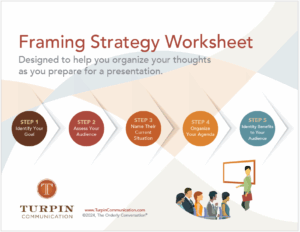
- Plan it in advance. Use our Framing Strategy Worksheet to organize your thoughts. It’s especially helpful when preparing presentations, high-stakes conversations, or complex meetings.
- Keep it brief. A solid frame doesn’t need to be long. Aim for 1–2 minutes.
- Speak naturally. Avoid reading from notes. Frame the conversation the way you’d explain it to a colleague over coffee, just with a little more structure.
- Be flexible. While you want to be prepared, framing isn’t about being rigid. It’s about creating focus so the conversation can unfold productively.
The Bottom Line
Meetings and presentations don’t have to be frustrating. When you start with a strong frame, you establish trust, foster clarity, and make it easier for everyone to do their best thinking.
Download the Framing Strategy and try using it this week. You might be surprised how much smoother your conversations become when you simply take a moment to answer, “What are we talking about, and why?”
And if it works for you, why not share it with your team?