
- Dale Ludwig Myths Debunked, Presentations, The Orderly Conversation
If you’re a manager, you’ve probably observed one of your direct reports deliver a presentation and wondered what sort of feedback you should give them. They may have been less-than-engaging, delivered slides that were confusing, or failed to genuinely connect with audience members. As a result, the business the presentation set out to achieve was never completed, or it wasn’t completed efficiently.
To address these issues, you might fall back on your own experience or rely on a list of well-worn rules that a lot of businesspeople rely on. Rules are simple and easy to understand. The problem, though, is that a lot of rules aren’t going to solve the problem.
Why Standard Presentation Advice Misses the Mark
Much of the standard presentation advice circulating in workplaces today comes from speech coaching, public speaking courses, and the TED Talk tradition. Those sources weren’t built for business. They were built for a speaker on a stage, addressing a large audience that chose to be there. There are no slides that communicate complex information; there is no back-and-forth with the audience, and the goal is to be inspirational or entertaining rather than informative or persuasive.
A TED Talk is a performance. A business presentation is a conversation. These are genuinely different things, and the rules that work for one can actively undermine the other. In a business meeting or conference room, your slides are often also working documents. Your audience expects detail and may push back with questions at any moment. Your goal isn’t to move a crowd. It’s to guide a conversation that leads to a decision, an alignment, or a next step.
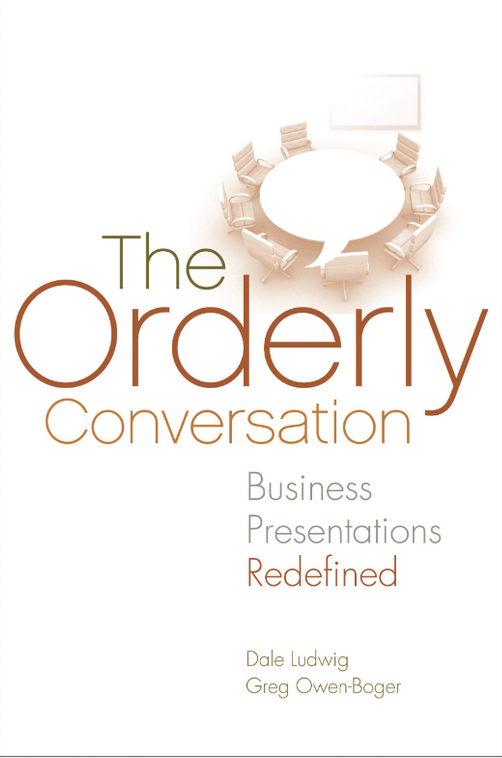
This is the foundation of The Orderly Conversation® approach developed by Turpin Communication—business presentations aren’t speeches. Coaching someone as though they are sets them up to fail.
What follows is a list of some of the most common rules to avoid and what to do instead.
Rule #1: “Begin with an Attention Grabber.”
This one makes perfect sense on a TED stage or at a keynote. The speaker doesn’t know the audience; the audience is made up of vastly different people, and attention needs to be earned in the first thirty seconds. An unexpected opening, a provocative question, or a compelling story serves a real purpose there.
Why this advice doesn’t work:
In a business presentation, the situation is different. The audience has a stake in the topic and the outcome. They came to this meeting for a reason. Using an artificial attention grabber would feel like a delay, or worse, like theater in a context that calls for work.
The better approach:
The coaching point for your employees is not to open with something surprising. It’s to open with something relevant. Tell the audience what you’re addressing, why it matters to them, and what you need from them at the end. That’s the business equivalent of an attention grabber, and it respects everyone’s time.
Rule #2: “Don’t Put Too Much Text on Your Slides. Images Are Better.”
Clean, visual slides look great in TED talks. They look great in keynotes. And there’s a real insight behind the advice: slides overloaded with dense text can overwhelm an audience and undermine the presenter.
Why this advice doesn’t work:
In a business context, slides serve a different purpose. They support the conversation and function as documents that people will reference afterward. They may be shared with colleagues who aren’t in the room, so they need to make sense to someone who missed the live explanation. A visual that looks polished but doesn’t communicate anything specific is less useful than a table showing the actual numbers.
The better approach:
The coaching question isn’t “Is this an attractive visual?” It’s “Does this slide communicate what the audience needs?” Sometimes the answer is a chart. Sometimes it’s precise language or specific data. This rule confuses aesthetics with usefulness, and they aren’t the same thing.
Rule #3: “Never Read from Your Slides. Your Audience Can Read For Themselves.”
This one gets repeated constantly, and the instinct behind it is understandable. A presenter who reads every bullet word-for-word while facing the screen is hard to watch and easy to tune out.
Why this advice doesn’t work:
The rule as stated is too broad. In many business presentations, slides serve as shared reference points, not just visual aids. Delivering the specific language on a slide, especially when precision matters, is often exactly the right thing to do.
There’s another reason this rule doesn’t work. When a presenter ignores a slide’s content and instead uses different language than what’s on the slide, the listener is left with a decision: listen or read? And they will probably, at least at first, attempt both, which results in neither message being fully understood. This results in wasted energy and confusion for all.
The problem isn’t reading from your slides. It’s losing the room while doing it.
The better approach:
The real coaching points for your team are these:
-
- Trim the content down to key phrases so it’s easier to use the same words on the slide.
-
- Read from your slides when you want your audience to read from them. Look at the screen to read, then direct your eye contact to the people in the room and go into more detail as appropriate.
Also, don’t attempt to weave the words on the screen into what you’re saying like a script for a play. Instead, narrate what you’re doing. “As you can see, the title of this slide is ABC…” Or “I want to draw your attention to the second bullet point. As it says…” In this way, you control their focus, and the slide becomes part of the conversation.
Rule #4: “Always Maintain Eye Contact.”
Like most absolutist rules, this one contains a real insight buried under unhelpful instruction. Yes, connection with the audience matters.
Why this advice doesn’t work:
It is impossible to “always maintain eye contact.” Think about how unnatural and uncomfortable it would be to have a conversation with a friend and never let go of eye contact. Of course, the opposite is also true. Conversing with someone who never looks you in the eye is also very uncomfortable.
The better approach:
A presenter’s goal should be to use eye contact as naturally as they do during a one-to-one conversation. That means that eye contact makes the connection with people that needs to be made while also looking away at times to pause, think, or look at a slide. What’s important isn’t the duration of eye contact, but the quality of the connection it makes.
Rule #5: “Stand Still and Gesture for Impact.”
Like all of the rules discussed here, this one sets out to correct a real problem. Presenters who wander or pace can be distracting, as can people who gesture too much or too little. The root of the problem is usually an uncomfortable presenter bursting with nervous energy or desperately trying to hold that energy in.
Why this advice doesn’t work:
Delivering an effective presentation is hard work. It requires all of a person’s brain power and attention. If a presenter is thinking about their hands and feet, self-consciousness is likely to set in, which heightens cognitive load and increases nervousness.
The better approach:
The coaching here should focus on helping people get comfortable moving in the space they are in. This includes standing still at times. Gestures should come naturally. Never plan a gesture or hold your hands together to avoid gesturing. Success occurs when presenters stop thinking about what their hands are doing and focus on what they are saying and who they are saying it to.
Ask Questions to Build Skills
When you’re helping someone on your team prepare for a presentation, your advice should be situational, and nuance matters. The goal is to replace unhelpful rules with more useful questions so that they can find their own solutions through your guidance. For example:
- Are you opening with what the audience needs to know, or trying to hook them? In business, relevance lands better than drama.
- Is this slide communicating what the audience needs?
- Are you bringing your slides into the conversation? Point out what’s important on your slide, then return to the listeners.
- Are you using your eye contact naturally? Make a real connection, then move on.
- Are you comfortable standing still in one place and moving through the space you have? Are you gesturing in the same way you do during informal conversation?
These questions get at the real issues without prescribing a set of behaviors that may or may not fit the presenter or the situation. Good coaching is situational and nuanced, not scripted.
Excellent Communication Skills are Career-Building Skills
It’s hard to argue this point: improving communication skills is a great investment in building your team’s careers. And they look to you for help doing it.
The rules your employees are following may not be wrong in every situation. But if they came from a TED stage or a speech coaching tradition, they were never designed for a business conference room. The first step toward better presentations on your team is knowing which rules to get rid of and having something more useful to put in their place.
Looking for Structured Support?
Helping your team unlearn the wrong rules is one of the most important things a manager can do. It doesn’t require a formal program or a lot of time. It requires knowing what to look for and coaching in a way that is appropriate for the individual and the situation.
If you’d like a more structured approach to developing your team’s communication skills, Turpin’s Manager Support Program is built for exactly this kind of work. Reach out to learn how we partner with managers to coach presentation skills and slide design in a business context.