
- Greg Owen-Boger Leadership, Meetings, Presentations, Training
You’ve read the reports. You’ve seen the surveys. The number one concern business leaders have about their workforce is a lack of soft skills, especially communication. It’s a concern that transcends industries, job levels, and functional areas. And if you’re like many leaders we talk with, you’re wondering how to address it in a way that sticks.
At Turpin Communication, we often say that soft skills have a branding problem. The term sounds, well, soft. As if they’re nice to have but not essential. That perception is not only misleading; it’s harmful. The reality is that soft skills are some of the hardest to teach, the most essential for collaboration and leadership, and the most impactful on business outcomes.
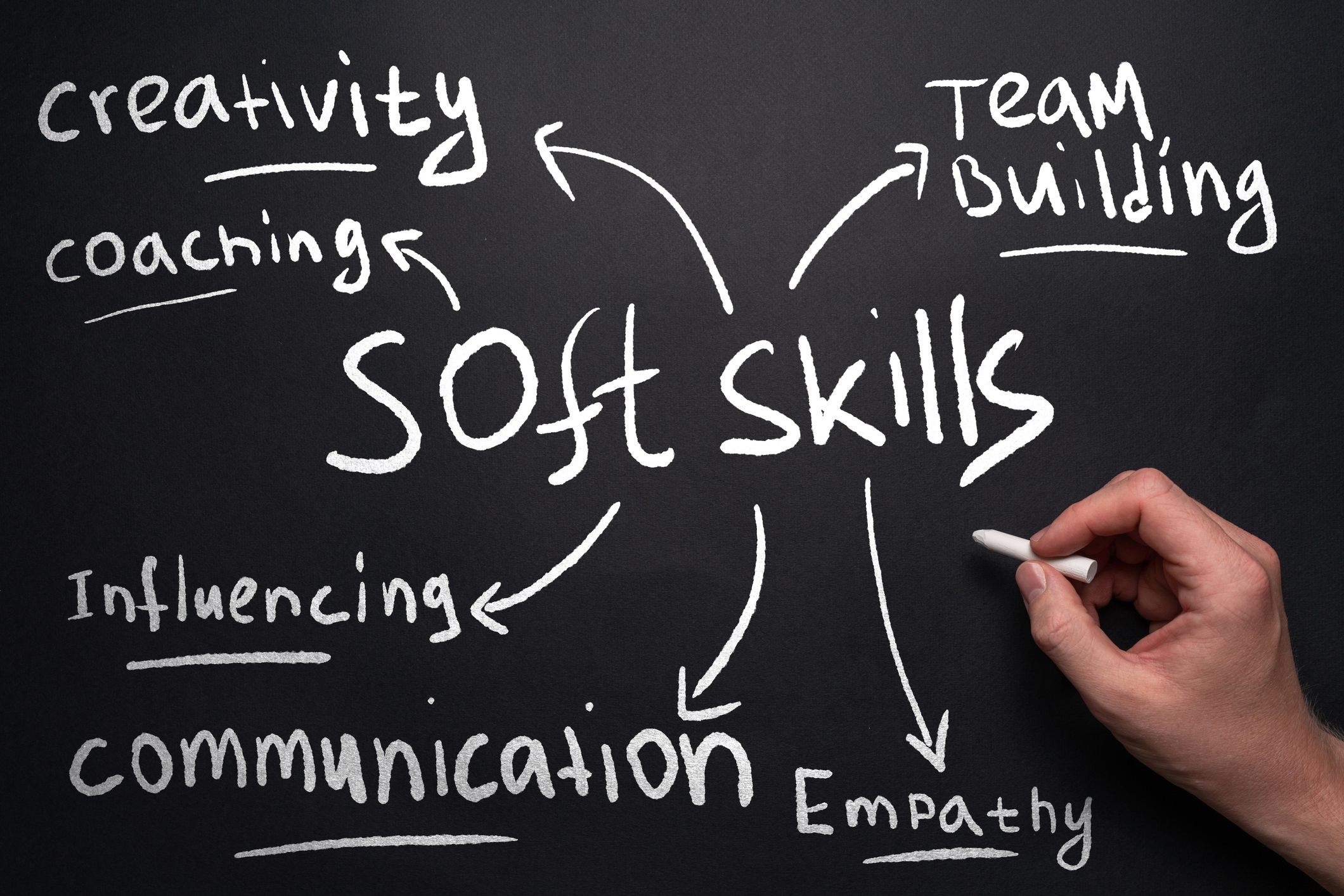
Let’s get clear about what we’re really talking about when we say soft skills. These are the human, interpersonal, and cognitive behaviors that make business happen: things like communicating clearly, working well in teams, managing time, showing empathy, leading discussions, and listening effectively. They may feel intangible, but they’re anything but. They’re observable, learnable, and crucially, coachable.
Behaviors, Not Traits
One common misconception is that soft skills are innate. You’re either born with empathy, presence, or clarity of thought, or you’re not. We disagree. These skills are not traits. They are behaviors that can be developed over time with guidance and intention.
Take eye contact as a simple example. It’s something we’re all able to do. But in a business setting, when the stakes are high and the pressure is on, even a basic behavior like eye contact can feel unnatural. That’s where intention comes in. At Turpin, we define a skill as a behavior used with intention.
So yes, we do teach eye contact. Not because our learners don’t know how to look at people, but because establishing eye contact intentionally, especially in high-pressure situations, creates connection and builds credibility. The intentional use of eye contact also reduces nervousness for speakers, which points to the importance of intentionality when using this skill. The last thing a nervous speaker wants to do is look at the people they’re addressing, but through its intentional use, nervousness is reduced.
Respect the Habit
Soft skills aren’t hard because people lack them. They’re hard because developing them means changing habits. Our learners have spent their entire careers, and entire lives, communicating in ways that feel natural to them. When we ask them to adjust a behavior (like being more concise, assertive, or open to feedback), we’re not just teaching a new skill. We’re asking them to examine and change an ingrained habit. That requires patience, respect, and a thoughtful approach.
In our workshops, we always start from within. Before we address the outward behavior, we work to understand what’s going on in learners’ heads. Why does it feel uncomfortable to assert yourself in a meeting? Why does holding eye contact feel unnatural? Why does asking a clarifying question feel risky? These internal conversations are where the real work begins.
Self-Awareness is a Game-Changer
Self-awareness is the linchpin of soft skill development. You can’t change what you don’t notice. That’s why our coaching is grounded in real-time observation, feedback, and reflection. We use video in nearly every workshop, not to intimidate, but to empower. When learners watch themselves back not just once, but at key moments in their progress, they begin to notice the very things we’ve been coaching them on. That’s where insight happens. That’s where change begins.
One of my favorite moments as a coach is when a learner looks at their final video and says, “I didn’t know I could do that.” They’re not talking about mastering a checklist of tips and tricks. They’re talking about communicating with authenticity, clarity, and presence. They’re talking about owning the room in a way that feels completely natural to them.
Real Skills for Real Business
Another problem with how soft skills are often taught is the artificiality of it all. We’ve heard of workshops where participants give a presentation about how to make a pizza. Or where they’re coached to look at audience members’ foreheads to simulate eye contact. These exercises may be entertaining, but they’re not effective. They don’t respect the learner’s time, experience, or intelligence. And they certainly don’t prepare people to succeed in real business situations.
We take a different approach. Every Turpin workshop is built around our learners’ actual work. Real presentations. Real meetings. Real content. That’s not just a nice-to-have; it’s essential. If you’re going to ask people to change how they communicate, they need to do it with material that matters. That’s how we ensure that skills transfer from the training room to the boardroom, the sales meeting, and the all-hands.
From Skill Awareness to Skill Building
You can learn about soft skills from a book or a podcast. That’s skill awareness. But if you want to see change—true, observable, meaningful change—you need skill building. And that takes time, practice, feedback, and support.
That’s why our workshops are designed to be deep, intensive learning experiences. We work in small groups, with two instructors, and plenty of time for individualized coaching. We work privately with each learner to reinforce the training and address their specific needs. We tailor the experience before, during, and after the session to ensure that the training meets your business objectives and respects the uniqueness of your team.
Helping You Make a Better Buying Decision
If you’re considering communication training for your organization, ask yourself: Are you buying a list of tips and tricks, or are you investing in consultative services designed to change the way people work together?
We’ve developed a checklist for evaluating communication training firms. It includes things like
- Do they have a strong, practical methodology?
- Are learners working with their real business content?
- Does the training include individual coaching with trained, compassionate professionals?
- Does the vendor use a long-term, blended learning approach?
- Are class sizes small enough to allow for meaningful practice and feedback?
If the answer is no to any of those questions, you’re probably looking at a commodity, not a solution.
Final Thought
You’re not just trying to improve your team’s ability to give a good presentation. You’re trying to build a culture where people listen better, collaborate more effectively, and get to the point faster. You want your leaders to show up with presence, your teams to run efficient meetings, and your salespeople to close more deals. None of that is possible without communication. And communication doesn’t happen without soft skills.
At Turpin, we’ve seen what’s possible when organizations invest in developing their people in a thoughtful, supportive, and intentional way. It’s not flashy. It’s not formulaic. But it is transformative.
We’d love to help you get there. Contact us to get the conversation started.